How to Make a Basement Smell Fresh (Fix the Damp First)
A musty basement means moisture. Find leaks, keep humidity at 30–50%, wash fabrics and handle mould properly, then add a light, clean scent to a dry room.
To make a basement smell fresh, start with moisture: a musty smell almost always means dampness, so find and fix any leaks, bring the humidity down with a dehumidifier, get the air moving and wash the fabrics that have soaked up the smell. Once the space is dry and clean, a light, clean fragrance from a reed diffuser or a waterless scent machine makes it smell lovely rather than merely neutral. Fragrance is the finishing touch, never the fix: it cannot dry a damp wall or treat mould, and it should never be used to hide either.
Why basements smell musty
Basements sit partly below ground, with concrete walls and floors against cool, damp soil and less sunlight and airflow than the rest of the house. In summer, warm humid air drifts down and meets those cool surfaces, where moisture can condense. Damp materials such as carpet, drywall, cardboard boxes and stored textiles then give off that heavy, earthy smell most of us recognize immediately.
That smell is information. Health Canada's guide to addressing moisture and mould indoors suggests rating musty or mouldy odours in each room as mild, moderate or strong, and taking immediate action, with professional help, if any room rates as strong. Treat a musty basement as a moisture problem to solve, not a smell to cover.
Step 1: Find the water
Walk the basement with a flashlight, ideally after heavy rain or a spring thaw. Look for:
- Damp patches, water stains or tide marks on walls and floors, especially at the base of exterior walls.
- White, chalky deposits on concrete, a sign that water has been moving through it.
- Cracks in the foundation and gaps around window wells and pipe penetrations.
- Plumbing leaks under sinks, at laundry hookups, around the water heater and along supply lines.
- Condensation beading on cold-water pipes, ducts or walls on humid summer days.
- Outside clues: downspouts that empty right beside the house, clogged eavestroughs, or soil that slopes toward the foundation instead of away from it.
Health Canada's guidance puts repairing plumbing leaks and drying moisture promptly near the top of the list. Small fixes, like extending a downspout or tightening a fitting, you can often do yourself. Water coming through the foundation is a job for a qualified contractor.
Step 2: Bring the humidity down
Health Canada recommends keeping indoor relative humidity between 30% and 50%, and running a dehumidifier in damp areas such as basements, or whenever moisture condenses on cold surfaces or humidity climbs above 50%.
- Measure first. An inexpensive digital hygrometer from a hardware store tells you where you actually stand. Check it in the middle of summer, when basements are usually at their dampest.
- Choose a dehumidifier sized for the space, and follow the manufacturer's instructions for emptying, draining and cleaning it. A dirty bucket or filter can develop its own smell.
- Keep basement windows closed on muggy days while the dehumidifier runs; humid outdoor air only adds to the load. Open them on cool, dry days instead.
- Send moisture outside. Make sure the clothes dryer and any bathroom fan vent to the outdoors, as Health Canada advises, and avoid hanging wet laundry to dry downstairs.
Step 3: Get the air moving
Still air lets moisture and odour settle. A few small habits help:
- Run the furnace fan, if you have one, to circulate air between floors.
- Leave interior doors open, including storage rooms.
- Pull sofas, beds and bookcases a few centimetres away from exterior walls.
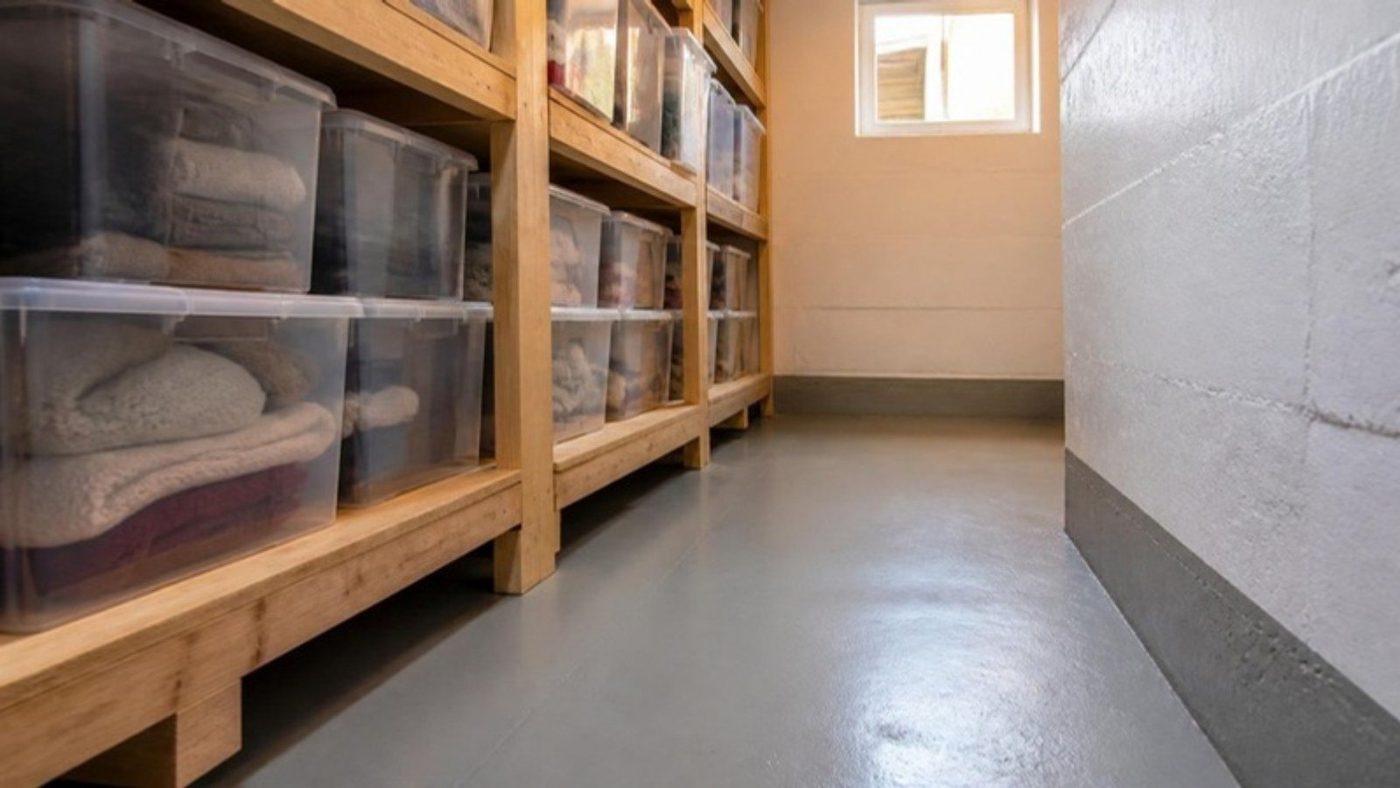
- Swap cardboard boxes for lidded plastic bins and lift storage off the floor onto shelving.
Step 4: Clean and wash what holds the smell
Wash or dry-clean rugs, throws, cushion covers, curtains, guest bedding and gym towels, and dry them completely before they come back down. In the laundry area, wipe the door seal of a front-loading washer and leave the door ajar between loads, following the manufacturer's care instructions. Pour a little water into a floor drain that is rarely used so the trap stays filled, and keep the sump pit covered.
If you find mould
Small amounts of mould can be cleaned by a homeowner. Health Canada describes a small area as three or fewer patches with a total area under 1 m², and recommends scrubbing with unscented soap and water, drying the surface completely and wearing protective equipment. It specifically advises not to use bleach. CMHC's mould cleanup guidance suggests warm water and unscented dishwashing detergent, with gloves, eye protection and an N95 respirator.
Anything bigger is a different matter. Health Canada classes more than three patches, or patches totalling between 1 and 3 m², as medium, and a single patch larger than 3 m² as large, needing professional assessment. CMHC advises that medium and large areas be cleaned up by people who are professionally trained. Never paint over mould, and never use fragrance to mask it. If anyone in the household has breathing concerns, speak with a health professional.
Then make it smell lovely
Once the basement is dry and clean, fragrance becomes a pleasure rather than a cover-up. Lighter, cleaner scents suit most basements best: heavy, sweet fragrances can feel close in a room with lower ceilings and little daylight. Our fragrances are IFRA-compliant and made without phthalates, parabens or formaldehyde. Here is how we would approach the most common spaces.
Finished rec room or family room. This is where a waterless scent machine shines, because it can fill a larger open room evenly on a gentle schedule. Grand Foyer, with bergamot, lemon, white jasmine, water lily, soft amber and white musk, reads bright and welcoming in a space that sees little sun. Use only a scent system concentrate in the machine, never a reed diffuser refill, start on the lowest setting with long pauses, and follow your diffuser's manufacturer instructions. Our guide to what size scent system your space needs helps you match the machine to the room.
Guest suite. A reed diffuser is quiet, flameless and needs nothing from your guests. Thé Blanc, our best seller, layers white tea, aloe, ginger, lily, cedarwood, sandalwood, vanilla, amber and musk into something calm and clean. Set it out a day or two before guests arrive, keep the reeds on the light side, and ask whether anyone prefers a fragrance-free room; our note on scenting considerately covers this.
Home gym. Ventilate after every workout and wash towels and mats first. Then place a reed diffuser near the doorway rather than beside the equipment, so the room greets you with something fresh without competing with the effort.
Laundry room. A small Thé Blanc travel reed diffuser on a high, stable shelf, away from the machines and out of reach of children and pets, gives clean laundry a soft, clean backdrop.
Cool basement air slows evaporation, so a reed diffuser may smell softer downstairs than it does upstairs. Flip the reeds a little more often, or see why you can't smell your reed diffuser for other fixes. If you can't decide between scents, The Complete Hotel Edit lets you try six hotel scents in 5 ml vials before choosing a full size.

Keep it fresh
- Check the hygrometer and empty the dehumidifier on a regular rhythm.
- Wash basement textiles with the seasons.
- Ventilate before you scent, and go lighter rather than stronger.
Quick answers
Why does my basement smell musty if I can't see any mould? Musty odour usually means moisture somewhere: behind drywall, under carpet, inside stored boxes or in humid air. Measure the humidity, look for leaks and condensation, and wash or remove damp materials. If the smell is strong, Health Canada advises getting professional help right away.
What humidity should a basement be? Health Canada recommends keeping indoor relative humidity between 30% and 50%, using a dehumidifier in damp areas such as basements as needed.
Will a dehumidifier get rid of the musty smell? It removes moisture from the air, which stops the conditions that cause mustiness. You still need to fix leaks, wash textiles and properly clean any mould for the smell to fade.
Can I just use a reed diffuser or scent machine to cover a basement smell? No. Fragrance can only sit on top of a musty smell; it does not dry, clean or treat anything. Fix the moisture first, then add a light scent to a clean, dry room.
What is the best scent for a basement? Lighter, clean scents tend to work best. Thé Blanc feels calm and fresh in a guest suite, and Grand Foyer brings brightness to a rec room or home gym.
Can I put a reed diffuser in a laundry room? Yes. Place it on a high, stable shelf away from the machines, out of reach of children and pets, and keep the room well ventilated.
Explore: the Scaldera Arch · Shop the collection · Take the Scent Quiz · Membership · Refill subscription
More from the Journal
- How to Scent an Open-Concept Home — Why fragrance fades in open-plan and high-ceiling homes, and how to fix it: one scent family, smart placement, the right source for each area, and a powder room layer.
- How to Get Rid of Cooking Smells in Your Home — Range hood on before you cook and running after, a window open, the right things cleaned. Then a light finishing scent in the entry, not on the kitchen counter.
- How to Make Your Home Smell Good for Thanksgiving (Without Competing With the Meal) — Clean and air out first, scent the entry, powder room and living room, keep the table unscented, and time your scent machine or reeds around dinner.