How to Get Rid of Cooking Smells in Your Home
Range hood on before you cook and running after, a window open, the right things cleaned. Then a light finishing scent in the entry, not on the kitchen counter.
The fastest way to get rid of cooking smells is to stop them spreading while you cook: switch on the range hood before you start, cook on the back burners, and keep the fan running after you finish while a window lets fresh air in. Then clean the things that hold odour, such as the hood filter, stovetop, drain, bin, sponges and soft furnishings, and only once the air is clear, add a light finishing scent in the entry or living room. Fragrance doesn't remove cooking odours; ventilation and cleaning do, and scent simply makes a fresh home feel finished.
Why cooking smells linger
Cooking sends steam, grease and fine particles into the air, and they carry the smell of whatever is in the pan. In an open-plan home or a condo, that air drifts straight into the living room, the hallway and sometimes the bedrooms. Some of it settles as a thin film on the stovetop, cabinets and walls, and some is absorbed by fabric: curtains, cushions, throws, rugs and the coats hanging by the door. That is why last night's fish or fried onions can still greet you the next morning, long after the air itself has cleared.
So the plan has two parts. Capture as much as possible while you cook, then clean whatever has already caught the smell.
Use your range hood the right way
Your range hood is the single most effective tool you have, and most of us use it too little, too late.
- Turn it on before you start cooking, so the airflow is already moving when the first steam and smoke rise.
- Use the high setting. Health Canada's factsheet on cooking and indoor air quality recommends using the range hood exhaust fan, preferably on high, when cooking, and notes that running it on high can reduce exposure to cooking-related pollutants by more than 80%.
- Cook on the back burners when you can. Both Health Canada and the US Environmental Protection Agency suggest it, because the hood captures more from the back of the stove.
- Keep it running after you finish. The EPA's guidance on cooking and indoor air quality recommends leaving the range hood on for 10 to 20 minutes after cooking.
- Use lids. A covered pot sends less steam and smell into the room.
- Clean or replace the filter on the schedule in your manufacturer's instructions. A greasy filter holds old smells and moves less air.
If your hood recirculates air back into the kitchen rather than venting outdoors, it can trap grease but the air stays inside, so pairing it with an open window matters even more.
Open a window and let the air cross
Health Canada also suggests opening windows while cooking and running the fan in your furnace or ventilation system, if you have one. The EPA adds a sensible condition: do it when outdoor air quality and weather allow and it is safe to do so.
For the best effect, create a cross-breeze. Open a window in or near the kitchen and another on the far side of the home, or switch on a bathroom fan that vents outdoors to help pull air through. While you cook something strong, close bedroom and closet doors so the smell doesn't settle into bedding and clothes. If it already has, our guide on how to make your closet smell good can help.
Clean the things that hold odour
Once the meal is over, a short clean-up does more than any fragrance can.
- Wipe the stovetop, backsplash and hood the same evening, while the grease is still soft. That film is where much of the lingering smell lives.
- Take out the garbage and compost after cooking fish, seafood, onions or anything fried. Rinse or wash the bin regularly, and let it dry before relining it.
- Clear the sink drain. Clean the strainer and stopper, run hot water, and never mix cleaning products.
- Refresh sponges and dishcloths. Wash them often, let them dry fully between uses, and replace sponges when they start to smell.
- Check the fridge. Throw out old leftovers, wipe up spills and keep strong foods in sealed containers.
- Steam-clean the microwave with a bowl of water and a few slices of lemon, then wipe the softened splatters away.
- Wash the fabrics nearby: tea towels, oven mitts, kitchen curtains, chair cushions and throws on a sofa that shares the room with the kitchen.
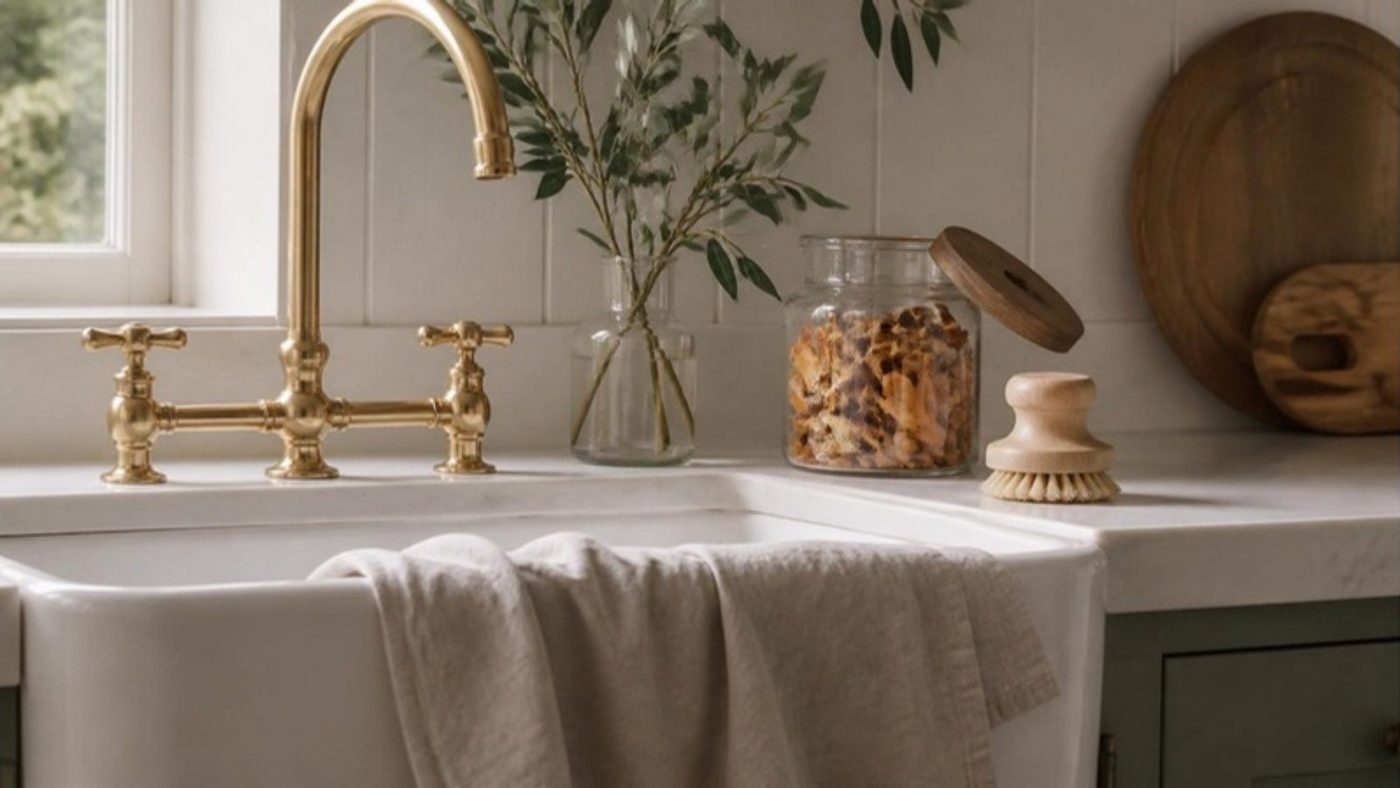
For strong-smelling meals
Fish, curries, bacon and deep-frying are worth a little planning. Run the hood on high from the start, open a window before you light the burner, keep lids on wherever the recipe allows, and get scraps out of the house the same night. In a smaller space where every room shares the same air, keep any fragrance afterwards especially light.
Simmer pots: a pleasant extra, not a fix
A simmer pot of water with citrus peel, a cinnamon stick and a sprig of rosemary fills the kitchen with a warm, homey aroma, especially on a fall afternoon or before Thanksgiving guests arrive. Enjoy it for what it is: a pleasant addition, not an odour remover. Only simmer while you are home and in the kitchen, keep the water topped up so the pot never boils dry, and turn the burner off when you leave the room.
Finish with a light scent, away from the kitchen
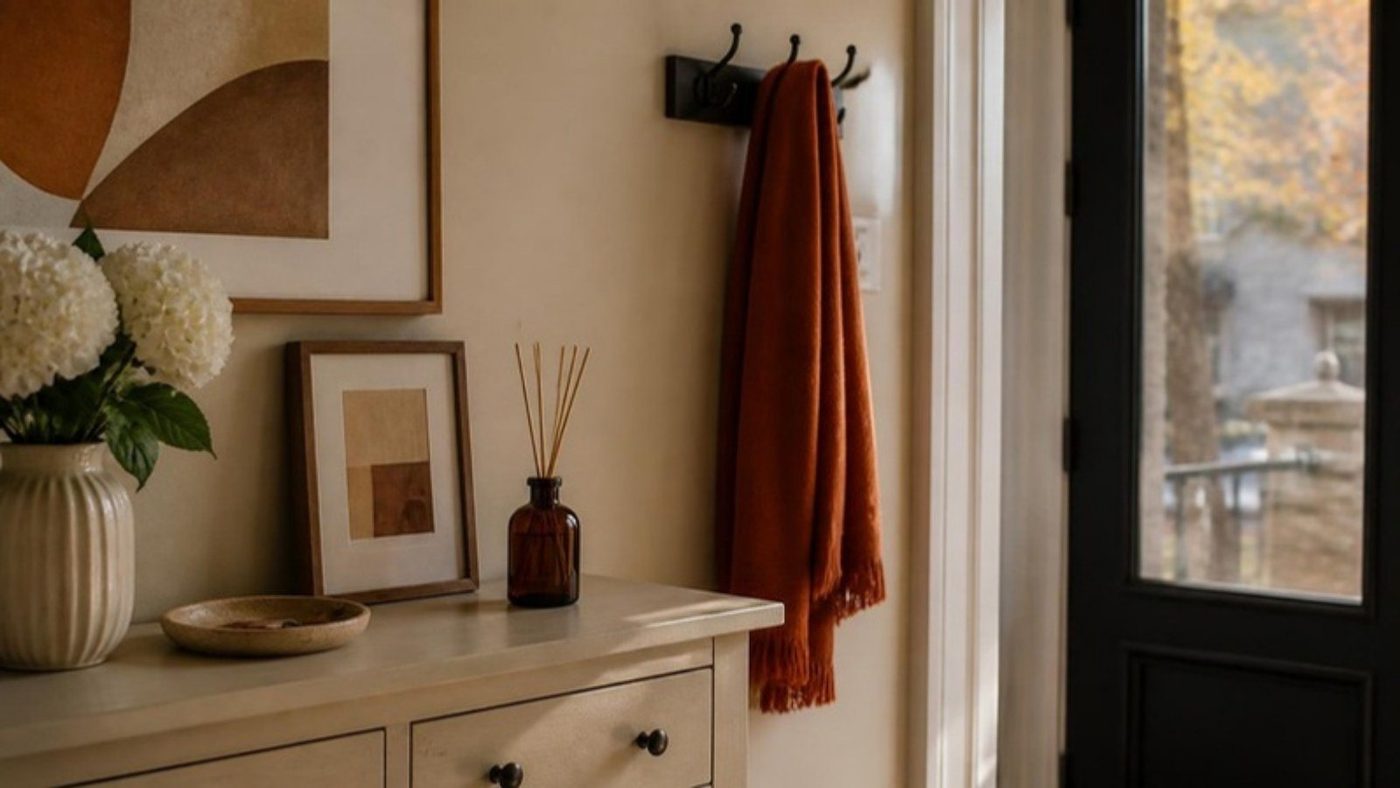
Once the air is clear and the kitchen is clean, a finishing fragrance makes the home feel welcoming. We suggest placing it in the entry or the living room rather than on the kitchen counter. Fragrance beside the stove competes with the aroma of food, and the entry is where guests form their first impression anyway. Our guides to the best scent for an entryway and the best scents for a living room go deeper.
Choose by the mood you want:
- Fresh and bright, after fish or frying. Grand Foyer opens with bergamot and lemon over white jasmine, water lily, soft amber and white musk. It reads clean and welcoming, like a hotel lobby.
- Calm and clean, every day. Thé Blanc, our best seller, pairs white tea, aloe and ginger with lily, cedarwood, sandalwood, vanilla, amber and musk.
- Warm, for fall dinners. Santal Vellum brings sandalwood, cardamom, iris, violet, leather, cedar and musk, a quiet and cozy choice for the living room after a long meal. Ambre Safran, with bergamot, jasmine, orchid, ambergris, sandalwood, cedar and warm musk, is richer still.
If you use a waterless scent machine, fill it only with a scent system concentrate, never a reed diffuser refill, start on the lowest setting and follow your diffuser's manufacturer instructions. If you would rather sample before committing, The Complete Hotel Edit holds six hotel scents in 5 ml vials.
Our fragrances are IFRA-compliant and made without phthalates, parabens or formaldehyde. Whatever you choose, go light, keep the room ventilated, place diffusers out of reach of children and pets, and offer a fragrance-free option to guests who are sensitive to scent.
Quick answers
How long should I leave my range hood on after cooking? The US EPA recommends leaving it on for 10 to 20 minutes after you finish. Turning it on before you start cooking, on the high setting, helps too.
How do I get the fish smell out of my house? Ventilate while you cook and afterwards, wash the pan and wipe the stovetop right away, take the scraps outside the same night and wash any tea towels that were nearby. Once the air is clear, a fresh citrus scent such as Grand Foyer in the entry makes the home feel finished.
Why does my house still smell like food the next day? The smell has settled into grease on kitchen surfaces and into fabrics such as curtains, cushions and throws, or it is coming from the bin, drain or sponges. Clean those and the smell goes with them.
Do reed diffusers or candles get rid of cooking smells? No. Fragrance can sit alongside a smell but it does not remove it. Ventilation and cleaning remove cooking odours; a light scent is the finishing touch afterwards.
Should I put a reed diffuser in the kitchen? You can, as long as it stays away from the stove and food preparation, but we prefer the entry or living room. See our guide to the best scents for a kitchen if you do want one there.
Do simmer pots remove odours? No. A simmer pot adds a pleasant aroma while it is on, but it does not remove cooking smells. Never leave one unattended.
Explore: the Scaldera Arch · Shop the collection · Take the Scent Quiz · Membership · Refill subscription
More from the Journal
- The Best Scents for a Kitchen (That Won't Fight Your Cooking) — Kitchens need a scent that refreshes the room between meals without clashing with food. The notes that work, where to put a diffuser, and what to avoid.
- How to Scent an Open-Concept Home — Why fragrance fades in open-plan and high-ceiling homes, and how to fix it: one scent family, smart placement, the right source for each area, and a powder room layer.
- How to Make a Basement Smell Fresh (Fix the Damp First) — A musty basement means moisture. Find leaks, keep humidity at 30–50%, wash fabrics and handle mould properly, then add a light, clean scent to a dry room.